

Plant Snips
in Eucalypt, Spring-Loaded
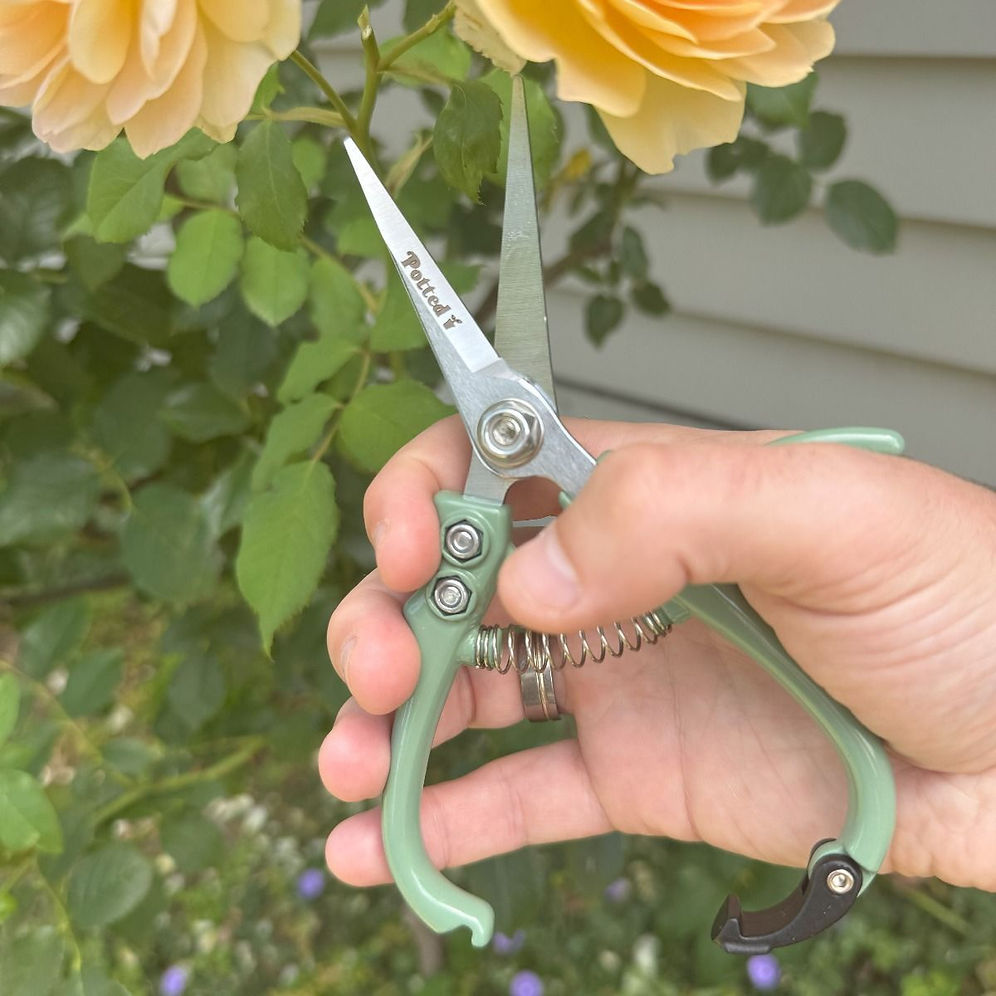
Proper snips, not craft scissors: long tapered blades that reach into a plant without mangling the rest of it.
- Spring-loaded, they reopen themselves
- Locking latch for safe storage
- Long tapered blades for precision
- Full-hand grip with coated handles
For Christmas, order by 16 December, or 18 December in WA. All dates
Proper snips, not craft scissors. Long tapered blades that reach into a plant without mangling the rest of it, a coiled spring that reopens them for you, and a locking latch so they close safely in a drawer. Sized for a full hand rather than a fingertip grip, which is what makes them comfortable for more than three cuts.
Key Features
- Spring-loaded. They reopen themselves between cuts.
- Locking latch. For safe storage.
- Long, tapered blades. For precise cuts in among foliage.
- Full-hand grip. With coated handles.
- Four jobs. Pruning, deadheading, harvesting herbs and taking cuttings.
Pūrē Standard
- A clean cut is plant care, not vanity. Blunt kitchen scissors crush a stem rather than sever it, and a crushed stem is an open door for disease. Sharp, narrow blades are the single biggest difference between pruning that helps and pruning that sets a plant back.
- The spring is why you will actually use them. Self-opening snips halve the hand work over a long session, which is the difference between deadheading the whole plant and giving up a third of the way round.
- Built to be sharpened, not replaced. A tool that can be honed and kept for a decade is the opposite of the disposable secateurs sold in supermarkets.
- Clean them between plants. A wipe with rubbing alcohol stops you carrying disease from one pot to the next. It is a genuinely good horticultural habit and it costs nothing.
- Where we would like more. Potted publish the blade as carbon steel. They do not publish the handle material. Their trade listings give the country of manufacture as China.
Overall score:
| Category | Score |
|---|---|
| Performance | ⭐⭐⭐☆☆ (3/5) |
| Low-Tox & Material Safety | ⭐⭐⭐⭐☆ (4.5/5) |
| Sustainability | ⭐⭐⭐⭐☆ (4.5/5) |
| Manufacturing Transparency | ⭐⭐⭐☆☆ (3/5) |
| Packaging | ⭐⭐⭐⭐☆ (4/5) |
Care Instructions
- Keep them dry. Wipe the blades down after use, especially after cutting anything sappy.
- Clean between plants. Rubbing alcohol on the blades, to avoid spreading disease.
- Engage the latch. Before putting them away.
- Hone, do not replace. Sharpen the blades occasionally rather than buying a new tool.
Product Details
- Material. Metal blades with coated handles, a coiled return spring and a locking latch. Potted publish the blade as carbon steel but not the handle material.
- Action. Spring-loaded, self-opening.
- Safety. Locking latch for storage.
- Packaging. Supplied on a printed backing card.
- Origin. Made in China.
Choose options
For Christmas, order by 16 December, or 18 December in WA. All dates
Our Take
Proper snips for pruning and propagating, rather than the blunt kitchen scissors currently crushing your plants. Spring-loaded so they reopen themselves, and they latch shut for the drawer.
Pūrēly Organic
Good to know
Frequently asked
What are these snips for?
Pruning, deadheading, harvesting herbs and taking cuttings. The blades are long and tapered so you can reach in among foliage and make a clean cut without mangling everything around it.
Are they spring-loaded?
Yes. A coiled spring reopens them between cuts, which halves the hand work over a long session. They also have a locking latch so they close safely for storage.
Why does a clean cut matter?
Blunt scissors crush a stem rather than sever it, and a crushed stem is an open door for disease. Sharp, narrow blades are the difference between pruning that helps and pruning that sets a plant back.
What are they made from?
Metal blades with coated handles. Potted do not publish the blade steel, the handle material or a country of manufacture, so we are not going to guess at it.
How do I look after them?
Keep them dry and wipe the blades after use, especially after anything sappy. Clean them with rubbing alcohol between plants so you are not carrying disease from pot to pot, and latch them shut before putting them away.
