


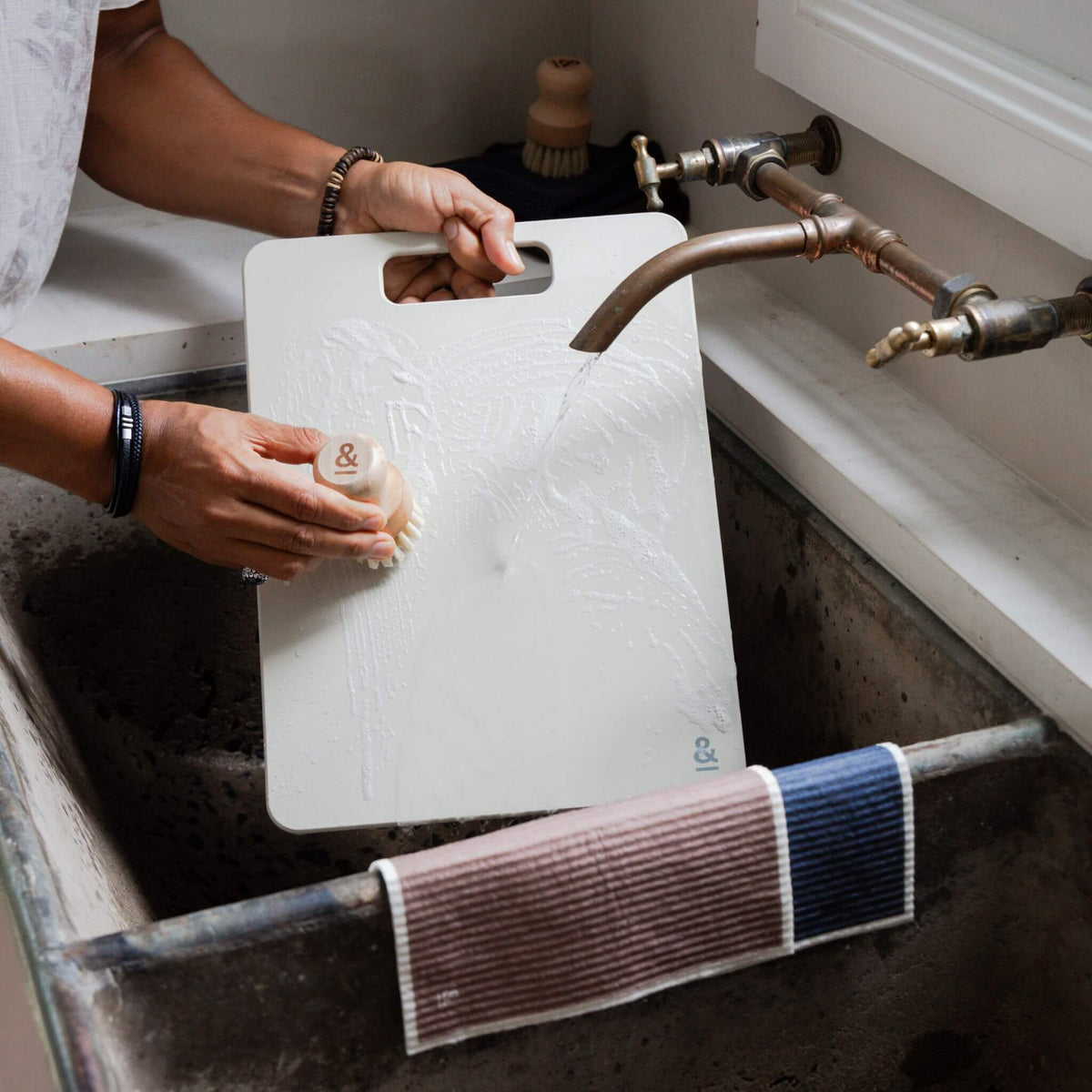
Mushroom Wood Cellulose Chopping Board
Three Sizes, Dishwasher Safe
Harder than plastic and softer than bamboo, so it is kind to knives, and almost no timber board can go in the dishwasher.
- Dishwasher safe, unlike timber
- Non-porous, holds no garlic or chicken
- Colour solid through, marks barely show
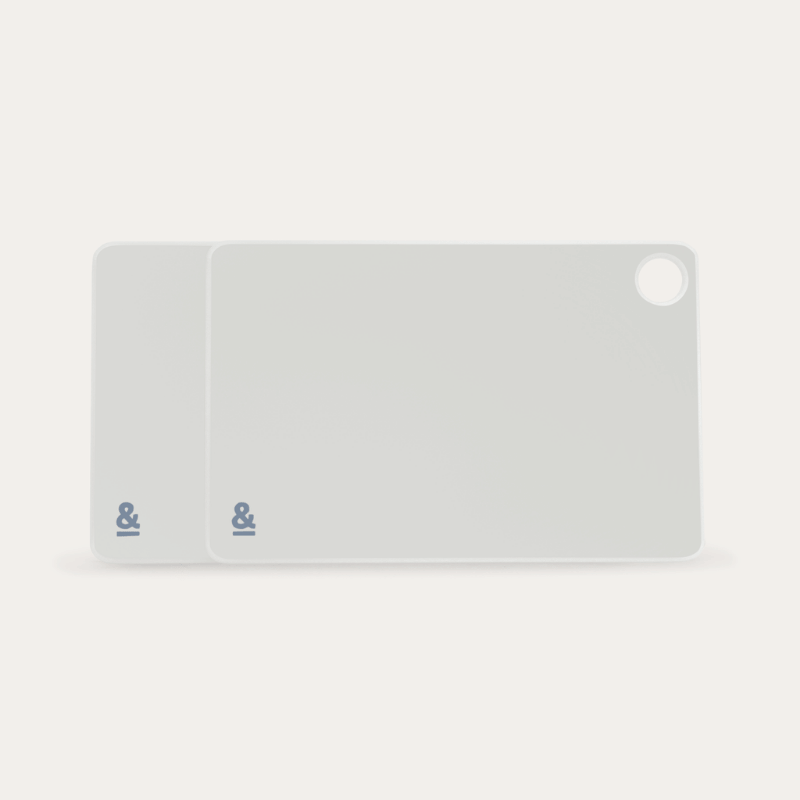
- Three sizes that stack flat
For Christmas, order by 16 December, or 18 December in WA. All dates
Availability. Mushroom boards are available to order and arrive with our next Seed & Sprout delivery.
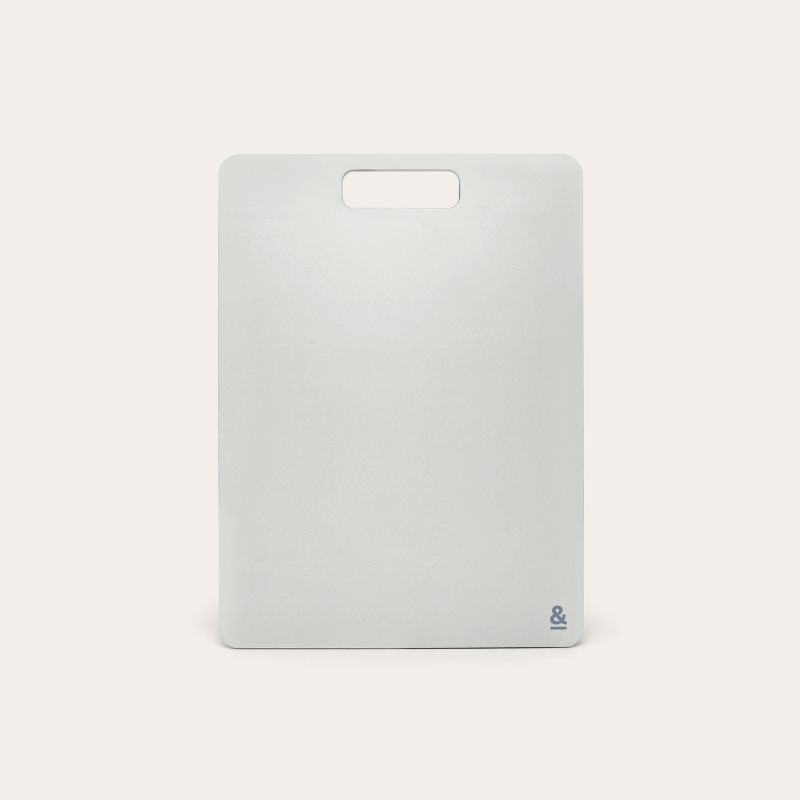
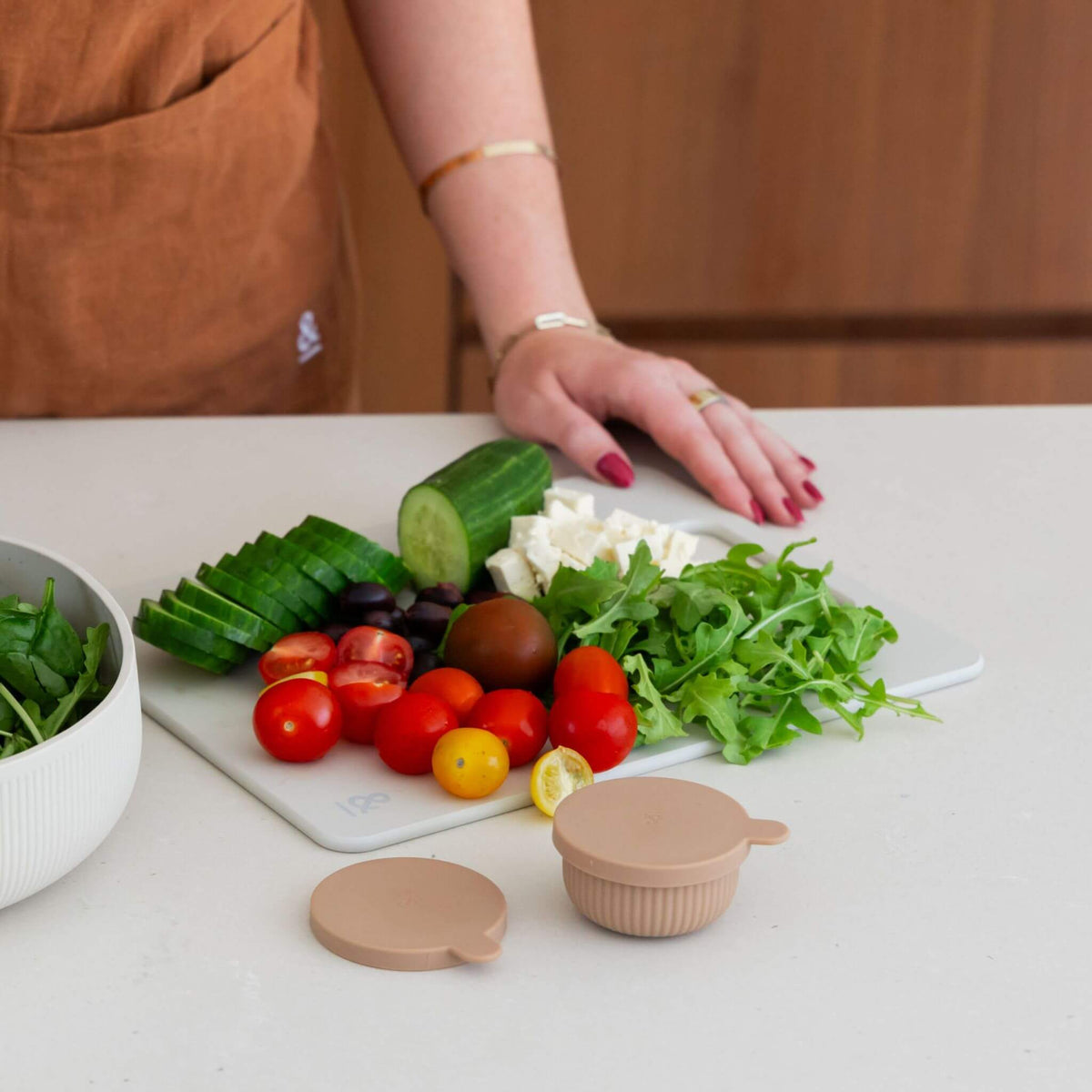
A chopping board made from compressed wood cellulose fibre: dishwasher safe, non-porous and kinder to knives than bamboo. It will not warp, split or go furry the way a timber board does, and in off-white Mushroom it reads as a serving platter on the table.
Which Size Do I Need?
- Small. Lemons, garlic, a bit of cheese. Lives on the bench.
- Medium. The everyday board. Vegetables, bread, sandwiches.
- Large. A roast, a full mise en place, a grazing board.
Key Features
- Dishwasher safe. Almost no timber board is.
- Non-porous. Does not hold onion, garlic or raw chicken.
- Kind to knives. Harder than plastic, softer than bamboo.
- Colour solid through. Knife marks barely show.
- Three sizes, stack flat. No warping, no splitting, no oiling.
Pūrē Standard
- Non-porous, so bacteria have nowhere to sit. Timber absorbs moisture into the grain. This does not, which is why it survives a hot dishwasher cycle.
- Not a polyethylene board. Plastic boards shed microplastic as the knife scores them. This is wood cellulose, so what comes off it is not polyethylene. We have found no study measuring shed rates for wood cellulose, so we do not claim it sheds less.
- Mostly renewable, not entirely. Wood pulp rather than petroleum, held with a food-safe binding resin. That resin is a plastic, which is why this board does not carry our Plastic Free tag. For no plastic at all, you want solid timber, oiled, hand washed.
- China is named openly. Made with Seed & Sprout's stated manufacturing partners rather than left vague.
- Where we would like more, and this went backwards. The previous version published its full composition: 80 per cent FSC pine, 20 per cent LFGB-certified resin, formaldehyde free. The 2026 version states only a cellulose fibre blend, with no percentages, no resin named and no certification. We have scored transparency down and asked them for the detail.
Overall score:
| Category | Score |
|---|---|
| Performance | ⭐⭐⭐⭐☆ (4/5) |
| Low-Tox & Material Safety | ⭐⭐⭐⭐☆ (4/5) |
| Sustainability | ⭐⭐⭐⭐☆ (4.5/5) |
| Manufacturing Transparency | ⭐⭐⭐☆☆ (3.5/5) |
| Packaging | ⭐⭐⭐☆☆ (3.5/5) |
Care Instructions
- Dishwasher safe. Top or bottom rack.
- Store upright or flat. A stand keeps both faces dry.
- No oiling required. Unlike a timber board.
Product Details
- Material. Compressed wood cellulose fibre with a food-safe binding resin, solid through.
- Thickness. 6mm. Heat resistant to 176C.
- Sizes. Small 23.5 x 30cm, 615g. Medium 27.5 x 37cm, 890g. Large 32.5 x 44cm, 1200g.
- Colourway. Mushroom, an off-white.
- Made in. China. Shipped plastic free.
Choose options
For Christmas, order by 16 December, or 18 December in WA. All dates
Our Take
The board for people who want timber's looks and plastic's practicality, and it genuinely delivers both. The honest caveat is the binding resin, which is why it does not carry our Plastic Free tag.
Pūrēly Organic
Good to know
Frequently asked
Is a wood cellulose chopping board dishwasher safe?
Yes, top or bottom rack, which is the main advantage over timber. It is non-porous, so it does not absorb water, warp or split in the heat.
Which size should I buy?
Small is 23.5 x 30cm for lemons and garlic, medium is 27.5 x 37cm for everyday vegetables and bread, large is 32.5 x 44cm for a roast or a grazing board. Medium is the one most kitchens use daily.
Is it plastic free?
No, and we have not tagged it as such. It is mostly wood cellulose, but a food-safe binding resin holds it together and that resin is a plastic. For no plastic at all you want solid oiled timber.
Does it shed microplastic like a plastic board?
It is wood cellulose rather than polyethylene, so what comes off it is not polyethylene. We have not found a study measuring shed rates for wood cellulose specifically, so we will not claim it sheds less than anything else.
Is it kind to knives?
Yes. It sits between plastic and bamboo in hardness, so edges last noticeably longer than on bamboo or glass. Knife marks show less because the colour runs solid through the board.
How heat resistant is it?
To 176 degrees Celsius, and it is 6mm thick. That covers a hot pan set down briefly, but it is a board and not a trivet.