
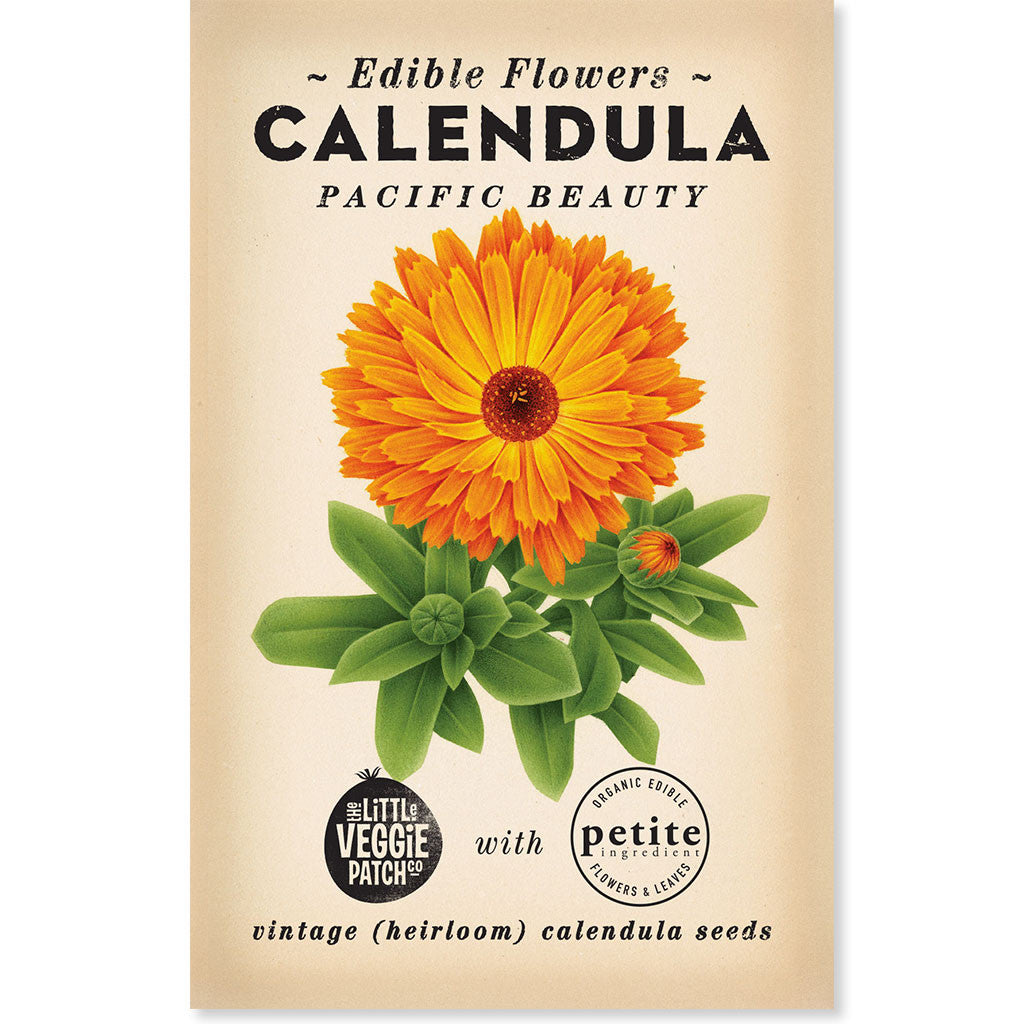
Calendula Princess Mix Seeds
Heirloom, Double Blooms
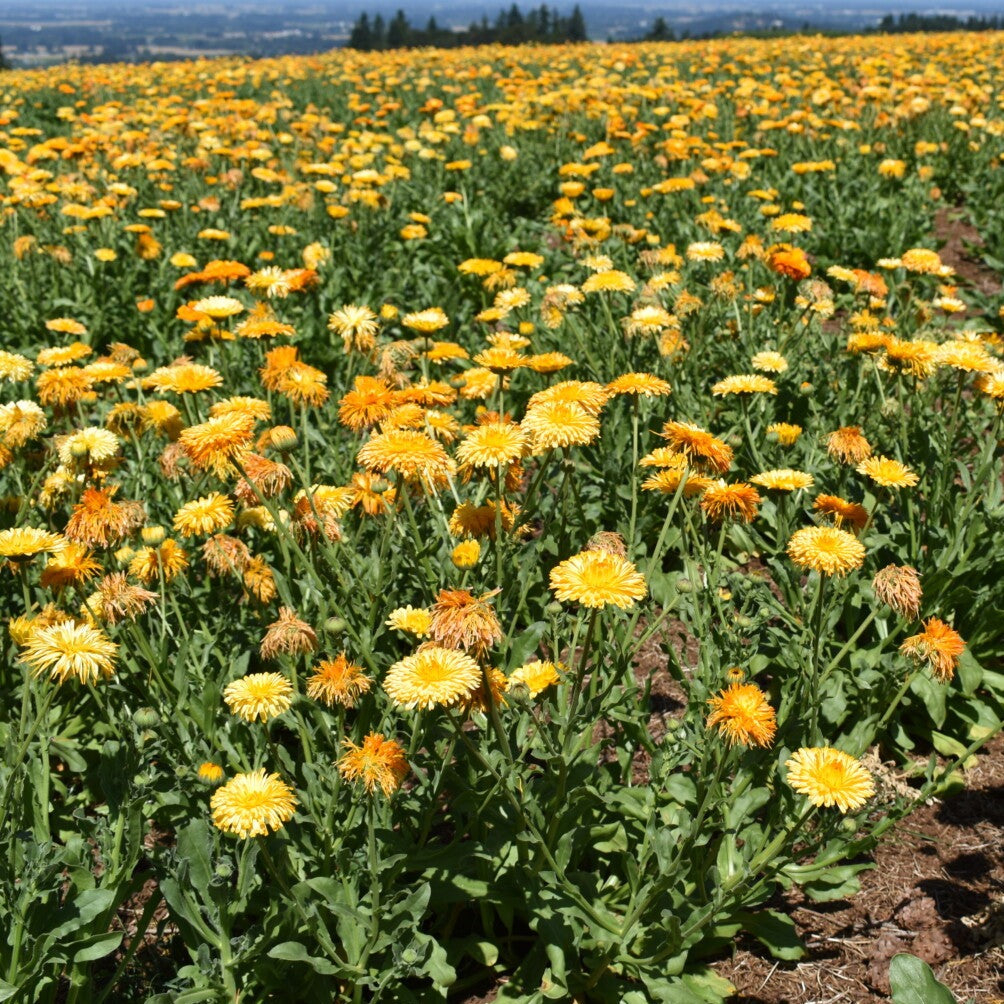
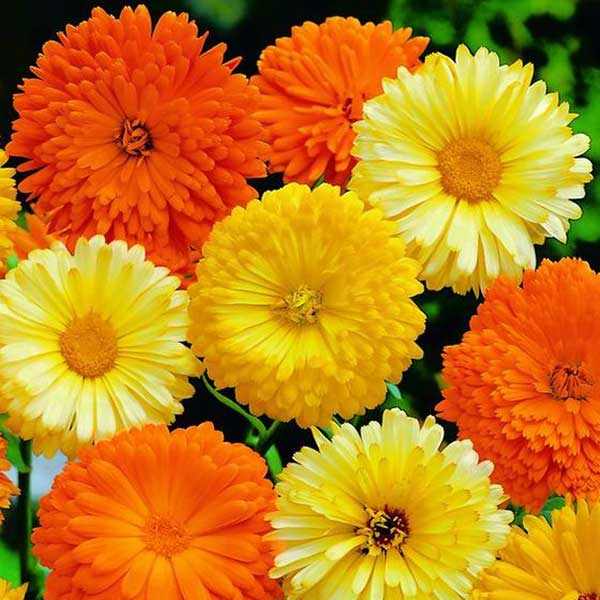
Double blooms in gold and orange with a quilled effect through the centre, many black-centred, and genuinely easy to grow.
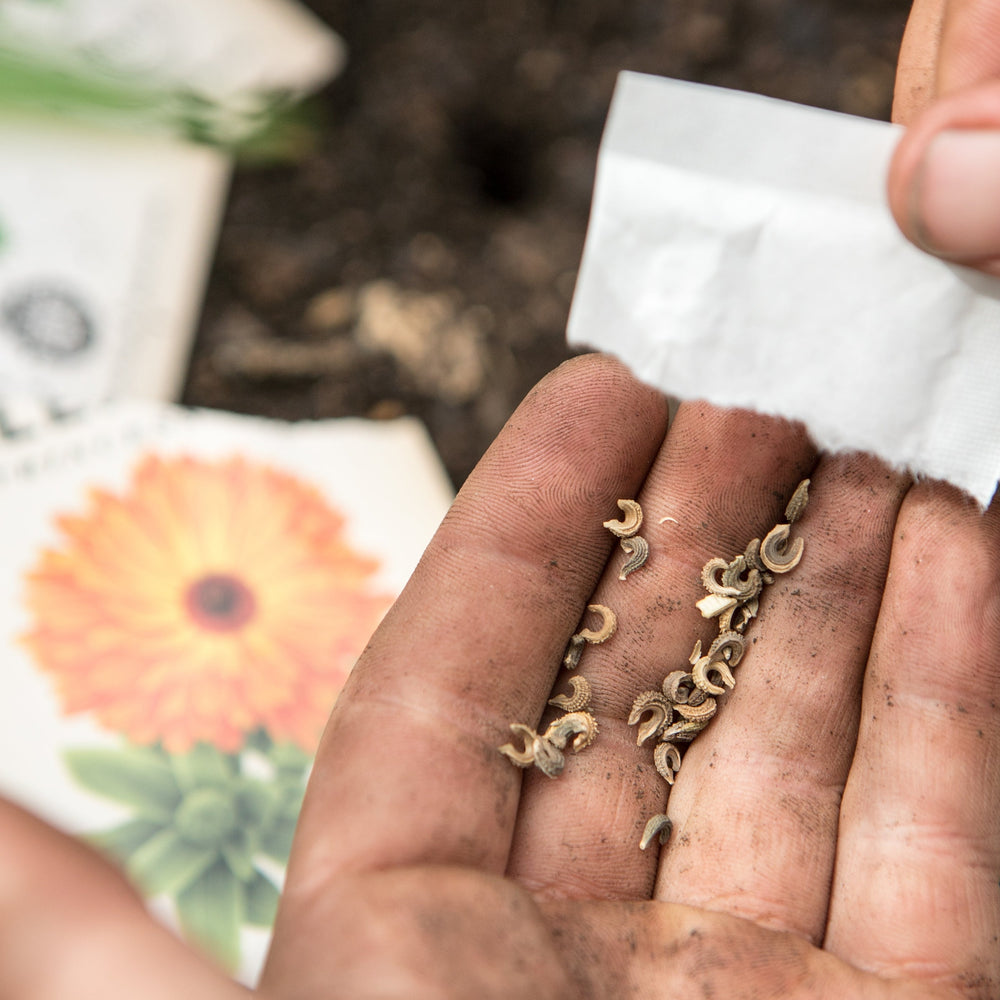
- About 50 seeds per packet
- Double gold and orange blooms
- An excellent cut flower
- Heirloom, so you can save seed
For Christmas, order by 16 December, or 18 December in WA. All dates
Double blooms in gold and orange with a quilled effect through the central petals, many of them black-centred. Calendula is one of the genuinely easy ones: it germinates readily, flowers for months, pulls in bees and hoverflies, and cuts well for the kitchen bench. A good first flower for anyone who has only ever grown herbs. Roughly 50 seeds in a packet.
Key Features
- Approximately 50 seeds per packet. Enough for a full border.
- Heirloom variety. So you can save seed from mature plants.
- Double gold and orange blooms. With quilled central petals, many with a black centre.
- An excellent cut flower. As well as a garden border.
- Reputed as a companion plant. It deters pests and attracts pollinators.
- Easy to grow. Genuinely suited to beginners.
Pūrē Standard
- Heirloom means it keeps going. Save seed from a mature plant and you never buy this packet again. A single packet that can become a permanent fixture is about as good as garden value gets.
- It earns its place twice over. Calendula is a workhorse: a border that feeds pollinators, a companion plant that is reputed to keep pests down, and a cut flower. In a small patch, anything that does three jobs deserves the space.
- Sourced locally, in small batches. Little Veggie Patch Co say they buy seed locally and in small quantities so it stays at maximum germination viability. Seed that has sat in a warehouse for two seasons is the usual reason a packet disappoints.
- Paper packet, nothing else. No plastic window, no foil sachet, no box. Roughly the smallest packaging footprint of anything we sell.
- Where we would like more. Little Veggie Patch Co do not state whether their seed is chemically treated. They describe their garlic as grown on a chemical-free farm, but they make no equivalent statement for seed, and they publish no germination rate or packing date. We would rather say that than assume.
Overall score:
| Category | Score |
|---|---|
| Low-Tox & Material Safety | ⭐⭐⭐⭐☆ (4/5) |
| Sustainability | ⭐⭐⭐⭐☆ (4.5/5) |
| Manufacturing Transparency | ⭐⭐⭐☆☆ (3.5/5) |
| Packaging | ⭐⭐⭐⭐☆ (4.5/5) |
How to Use
- Prepare the bed a fortnight ahead. Fresh manure and compost. Calendula wants nutrient-rich, well-drained soil.
- Soil pH. 6.5 to 7.0.
- Position. Full sun, though it will not mind a little afternoon shade.
- Sowing. Sow directly once daytime temperatures regularly pass 18 to 20 degrees. If it is still cold, start in seed trays and transplant when conditions improve.
- Spacing and depth. 15 to 20cm apart, 0.5 to 1cm deep.
- Keep picking the flowers. Calendula flowers harder the more you cut it.
When to Plant
- Zone 1, cool. October to April.
- Zone 2, temperate. September to May.
- Zone 3, subtropical. Anytime.
- Zone 4, tropical. Anytime.
- Perth and the south-west are Zone 2. So September to May. Melbourne, Sydney, Adelaide and most of the southern half of the country sit in Zone 2 as well.
Good to Know
- A note on eating them. Calendula petals are a well-known edible flower, mildly peppery, and are often scattered over salads or used as a colour in baking. Little Veggie Patch Co sell these as a garden border and cut flower rather than as a food crop, so treat the culinary use as general gardening knowledge rather than a claim from the grower, and only eat flowers you have grown yourself and know have not been sprayed.
Product Details
- Variety. Calendula officinalis, "Princess Mix", heirloom.
- Seed count. Approximately 50 per packet.
- Packaging. Plain paper seed packet.
- Sourcing. Little Veggie Patch Co source their seed locally and in small batches.
- Interstate customers. Some states restrict the entry of seed and plant material. Check your own state's plant biosecurity rules if you are unsure.
Choose options
For Christmas, order by 16 December, or 18 December in WA. All dates
Our Take
A flower that feeds the bees, cuts well for the kitchen bench and will happily reseed itself into a permanent fixture. Heirloom, so you never have to buy it twice.
Pūrēly Organic
Good to know
Frequently asked
When should I sow these in Perth?
Perth and the south-west sit in Little Veggie Patch Co's Zone 2, temperate, so September to May. Zone 1 (cool) is October to April, and Zones 3 and 4 (subtropical and tropical) can sow anytime.
How many seeds are in a packet?
Approximately 50.
Are these heirloom seeds?
Yes. Heirloom varieties come true from saved seed, so you can collect seed from a mature plant and sow it again next season rather than buying another packet.
How do I sow them?
Prepare the soil with fresh manure and compost a fortnight before planting. Sow directly once daytime temperatures regularly pass 18 to 20 degrees, 0.5 to 1cm deep and 15 to 20cm apart, in full sun. If it is still cold, start them in seed trays and transplant later.
Can I eat the flowers?
Calendula petals are a well-known edible flower, mildly peppery, often scattered over salads or used for colour in baking. Little Veggie Patch Co sell these as a garden and cut flower rather than a food crop, so treat that as general gardening knowledge, and only eat flowers you have grown yourself and know have not been sprayed.
Are the seeds chemically treated?
Little Veggie Patch Co do not say either way for their seed. They describe their garlic as grown on a chemical-free farm but make no equivalent statement about seed, and they publish no germination rate or packing date. We would rather tell you that than guess.
Why grow calendula?
It is easy, it flowers for months, it draws bees and hoverflies, it cuts well, and it is reputed as a companion plant that deters pests. In a small patch, anything doing three jobs earns its space.
