Coco Climber Plant Pole
Bendable and Stackable
Climbing plants do not really want a stake. In the wild a monstera hauls itself up a trunk, gripping bark with aerial roots.
- Coconut husk, mimics real bark
- It bends, and holds its shape
- Stackable, add height as it grows
- Breathable fibre feeds aerial roots
For Christmas, order by 16 December, or 18 December in WA. All dates
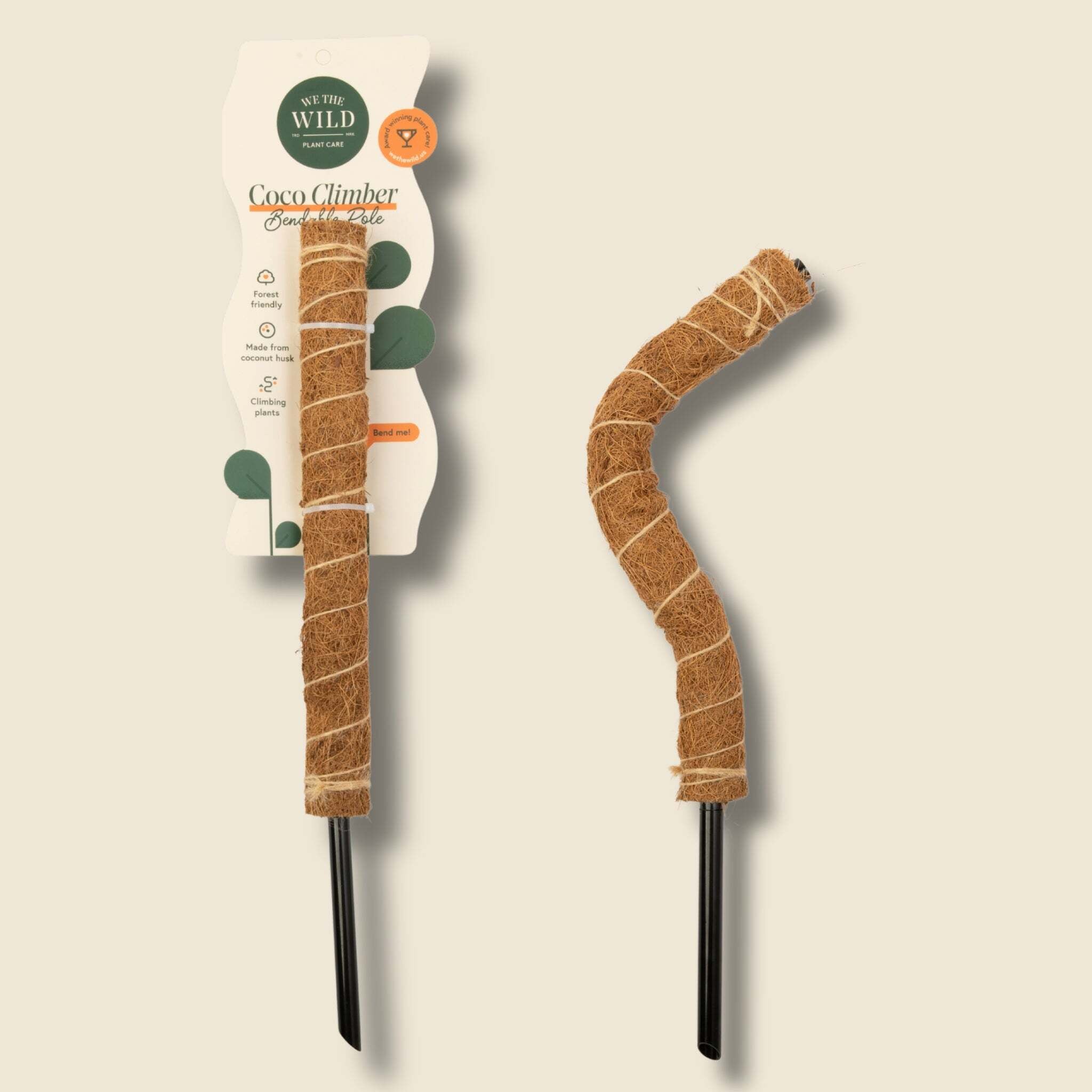
Climbing plants do not really want a stake. In the wild a monstera or philodendron hauls itself up a tree trunk, gripping bark with aerial roots, and the leaves get dramatically bigger once it does. The Coco Climber is coconut husk wound over a flexible core to imitate that texture, so your plant has something to actually hold onto rather than being tied to a stick. It bends, so you can curve it as the plant leans.
Key Features
- Coconut husk. Sustainably sourced, and it mimics the texture of real bark.
- It bends. Holds its shape, so you can follow the plant rather than fight it.
- Stackable. Screw poles together to add height as the plant grows.
- Breathable fibre. Holds moisture, which encourages aerial roots to anchor.
- Size. 16 inches, roughly 40cm, with a bare stake at the base to push into the soil.
- Origin. Made in Australia.
Pūrē Standard
- Coconut husk is a genuine by-product. Coir is what is left after the coconut industry has taken the flesh and the water. Using it is not a token gesture, it is a use for something that would otherwise be waste, and it happens to be the best texture for aerial roots to grip.
- It replaces the sphagnum moss pole. The traditional alternative is peat or sphagnum moss, harvested from bogs that take centuries to form and are significant carbon stores. Coir does the same job without that cost.
- Made in Australia. Unusual for a plant accessory, where almost everything in the category is imported, and it means a much shorter journey for a bulky, lightweight object.
- Bendable and stackable means it lasts. Most plant supports get outgrown and binned. This one extends and reshapes, so it stays with the plant instead of being replaced by a taller stick every year.
- Where we would like more. We The Wild are clear that the wrap is coconut husk, but they do not publish what the flexible inner core is made of, and it is sleeved in black. Until that is confirmed we are not calling this a plastic-free product. The coir is bound with a natural-looking twine and the pack is printed card with a plastic hanging tab.
Overall score:
| Category | Score |
|---|---|
| Performance | ⭐⭐⭐☆☆ (3.5/5) |
| Low-Tox & Material Safety | ⭐⭐⭐⭐☆ (4/5) |
| Sustainability | ⭐⭐⭐⭐☆ (4.5/5) |
| Manufacturing Transparency | ⭐⭐⭐☆☆ (3/5) |
| Packaging | ⭐⭐⭐☆☆ (3.5/5) |
How to Use
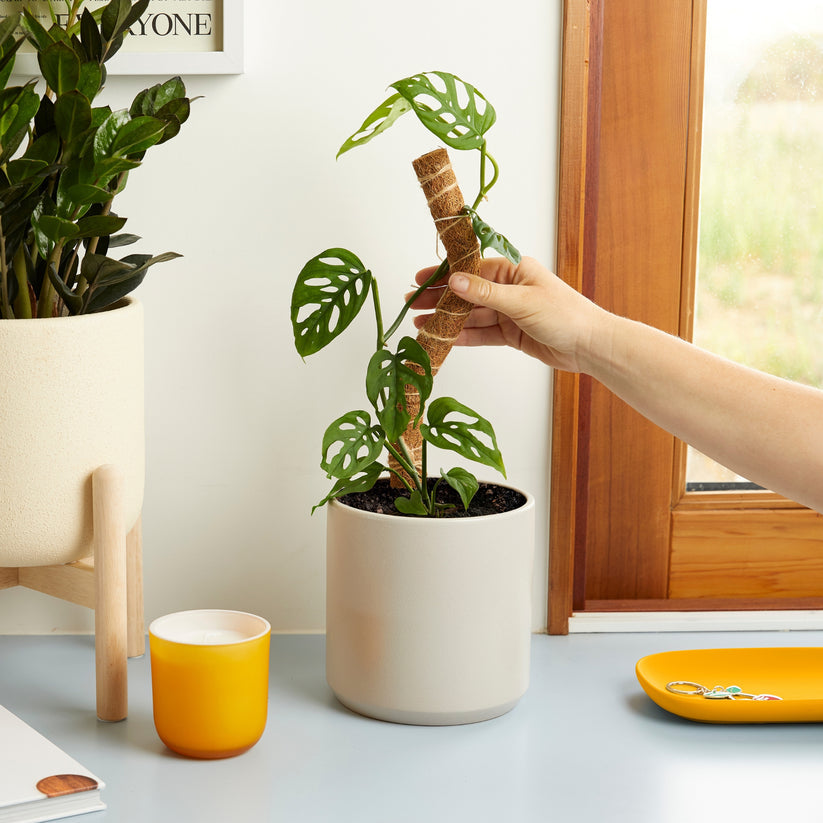
- Stake it. Push the bare section into the soil at the back of the pot, close to the main stem and clear of the root ball.
- Shape it first. Bend the pole to follow the plant's natural lean before you attach anything.
- Tie loosely. Rest the stem against the coir and secure with soft ties until the aerial roots take hold.
- Mist the coir. Damp fibre is what persuades aerial roots to anchor, so wet it when you water.
- Add height. Screw a second pole onto the top when your plant reaches the end of the first.
Product Details
- Materials. Sustainably sourced coconut husk wound over a bendable inner core and bound with twine. The lower section is left bare as a stake. We The Wild do not publish the composition of the inner core.
- Length. 16 inches, approximately 40cm.
- Shaping. Bendable by hand.
- Stackable. Screws to additional poles for height.
- Suits. Monstera, pothos, philodendron and other aerial-rooted climbers.
- Origin. Made in Australia.
Choose options
For Christmas, order by 16 December, or 18 December in WA. All dates
Our Take
A coir pole for the plants with ambitions: monsteras and pothos that want to go up rather than flop across the sideboard. Bendable, stackable, and Australian made, which almost nothing here is.
Pūrēly Organic
Good to know
Frequently asked
What does a coir pole actually do?
Climbing plants like monstera and philodendron put out aerial roots that grip bark in the wild, and their leaves get noticeably larger once they can climb. The coconut husk gives those roots the texture to anchor into, which a bare stake cannot.
How long is it?
16 inches, roughly 40cm, with the lower section left bare so it can be pushed into the soil.
Can I make it taller?
Yes. The poles screw together, so you add a second one on top when the plant reaches the end of the first rather than replacing the whole thing.
Does it really bend?
Yes, by hand, and it holds the shape. Bend it before you tie the plant on so you can follow its natural lean instead of forcing it straight.
Is it plastic free?
The wrap is coconut husk and the binding is twine, but We The Wild do not publish what the flexible inner core is made of, and it is sleeved in black. Until they confirm it we are not making a plastic-free claim.
Where is it made?
Australia, which is unusual for a plant accessory. The coconut husk itself is a by-product of the coconut industry.
How do I get the roots to grab on?
Keep the coir damp. Mist it when you water the plant, and tie the stem loosely against the pole until the aerial roots find their way in.