Dill Seeds
Organic, Bouquet Variety
Two crops in one packet: the feathery foliage, and then the seed heads if you let it run on.
- Grown for both foliage and seed
- Suits cool and warm season both
- An annual in the celery family
- About 100 seeds per packet
For Christmas, order by 16 December, or 18 December in WA. All dates
Description
Dill is two crops in one packet. There is the feathery foliage, which is what you want for fish, potatoes and anything going into a pickling jar, and then there are the seed heads if you let the plant run on. It is an annual in the celery family and it is the fussiest thing in this range about timing: happy in both the cool and the warm season, but not in the harshest end of either, which is why it has four separate sowing windows rather than one. Roughly 100 seeds.
Key Features
- Grown for two things. The leaf foliage and the dried seed, and both are worth having.
- Suits cool and warm season both. With a deliberate gap through the worst of each.
- Approximately 100 seeds per packet. The smallest count in the range, so sow it with intent.
- An annual in the celery family. Anethum graveolens.
- Four separate sowing windows. More timing-sensitive than anything else here, so check your zone before you open the packet.
Pūrē Standard
- Seed, paper, nothing else. A plain paper packet and a few grams of seed. There is almost nothing here that could be a problem and almost nothing to throw away, which is rare for anything we sell.
- Two harvests from one sowing. Leaf first, then seed if you leave it to run. Very little of what you buy goes unused, which is not true of a supermarket bunch.
- Sourced locally in small batches. Little Veggie Patch Co state they source all their seed locally and in small batches so it stays at maximum viability for germination. That is their statement, and it is the sort of detail most seed sellers do not bother making.
- Performance, 3.5. Seed bought locally in small batches, which is what keeps germination strong. We hold back the rest only because no germination rate or packing date is published.
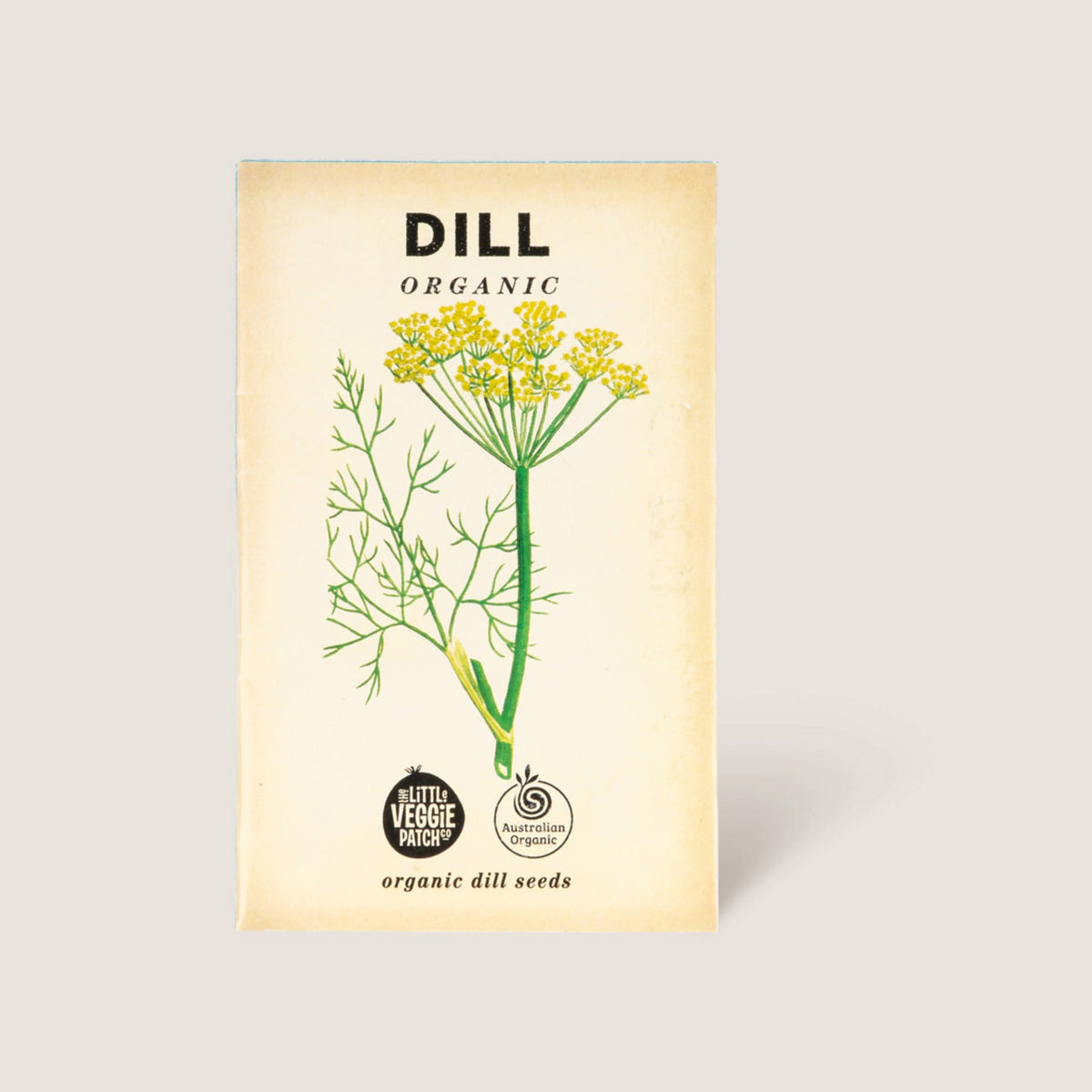
- Where we would like more. The packet carries the Australian Organic bud, which you can see in the photograph above. What Little Veggie Patch Co do not publish anywhere, on this listing or across their own site, is the licence number behind that mark, so we have not been able to verify it on your behalf. They also publish no germination rate and no packing date.
Overall score:
| Category | Score |
|---|---|
| Performance | ⭐⭐⭐☆☆ (3.5/5) |
| Low-Tox & Material Safety | ⭐⭐⭐⭐☆ (4/5) |
| Sustainability | ⭐⭐⭐⭐☆ (4.5/5) |
| Manufacturing Transparency | ⭐⭐⭐☆☆ (3/5) |
| Packaging | ⭐⭐⭐⭐☆ (4.5/5) |
How to Use
- Prepare the bed a fortnight ahead. Little Veggie Patch Co are specific here: work in a high level of organic matter, compost and well-rotted animal manure, a couple of weeks before you sow.
- Soil. Free draining and well integrated with compost, or a good quality potting mix if you are growing in pots. Soil pH 5.5 to 7.5.
- Check your zone first. This is the one packet in the range where sowing in the wrong month is the difference between a crop and nothing.
- Take the foliage early. Pick the feathery leaf while the plant is still growing, and leave a plant or two to run on if you want the seed.
- Let it go to seed on purpose. The dried seed is a crop in its own right, for pickling and for bread.
When to Plant
- Zone 1, cool. March to April, then October to December.
- Zone 2, temperate. March to June, then September to November.
- Zone 3, subtropical. April to September.
- Zone 4, tropical. June to July.
- Perth and the south-west are Zone 2. So March to June, then September to November, as are Melbourne, Sydney, Adelaide and most of the southern half of the country.
Product Details
- Variety. Anethum graveolens, Bouquet.
- Seed count. Approximately 100 per packet.
- Habit. Annual, celery family, grown for both foliage and dried seed.
- Soil pH. 5.5 to 7.5.
- Certification. The packet carries the Australian Organic bud. The licence number behind it is not published by the brand.
- Also in the range. There is a heirloom Dill 'Common' as well. This is the organic one.
- Packaging. Plain paper seed packet.
- Sourcing. Little Veggie Patch Co source their seed locally and in small batches.
- Interstate customers. Some states restrict the entry of seed and plant material. Check your own state's plant biosecurity rules if you are unsure.
Choose options
For Christmas, order by 16 December, or 18 December in WA. All dates
Our Take
Two crops in one packet: feathery foliage for fish and pickles, then the seed heads if you let it run. Fussier about timing than anything else here.
Pūrēly Organic
Good to know
Frequently asked
Is it certified organic?
The packet carries the Australian Organic bud, which is a genuine certification mark, and you can see it in our photograph. What Little Veggie Patch Co do not publish anywhere, on this listing or across their own site, is the licence number behind that mark, so we have not been able to verify it on your behalf.
When should I sow dill in Perth?
Perth and the south-west are in Little Veggie Patch Co's Zone 2, temperate, so March to June and then September to November. Note the deliberate gap through midwinter and midsummer. Zone 1 (cool) is March to April and October to December, Zone 3 is April to September, and Zone 4 is June to July.
What is the difference between this and the heirloom dill?
They are two separate packets. This is the organic Bouquet variety; the other is the heirloom Dill 'Common'. Different variety, different price tier.
Can I use the seeds as well as the leaves?
Yes, and that is rather the point of dill. Pick the feathery foliage while the plant is growing, then leave a plant or two to run on and the dried seed is a crop in its own right, for pickling and for bread.
How do I prepare the bed?
Little Veggie Patch Co recommend working in a high level of organic matter, compost and well-rotted animal manure, a couple of weeks before you sow. Then a free draining soil well integrated with compost, at pH 5.5 to 7.5.
How many seeds are in a packet?
Approximately 100, which is the smallest count in this range.
Why does it have four sowing windows?
Dill suits both the cool and the warm season, but not the harshest part of either, so the windows sit either side of midwinter and midsummer rather than running straight through.